
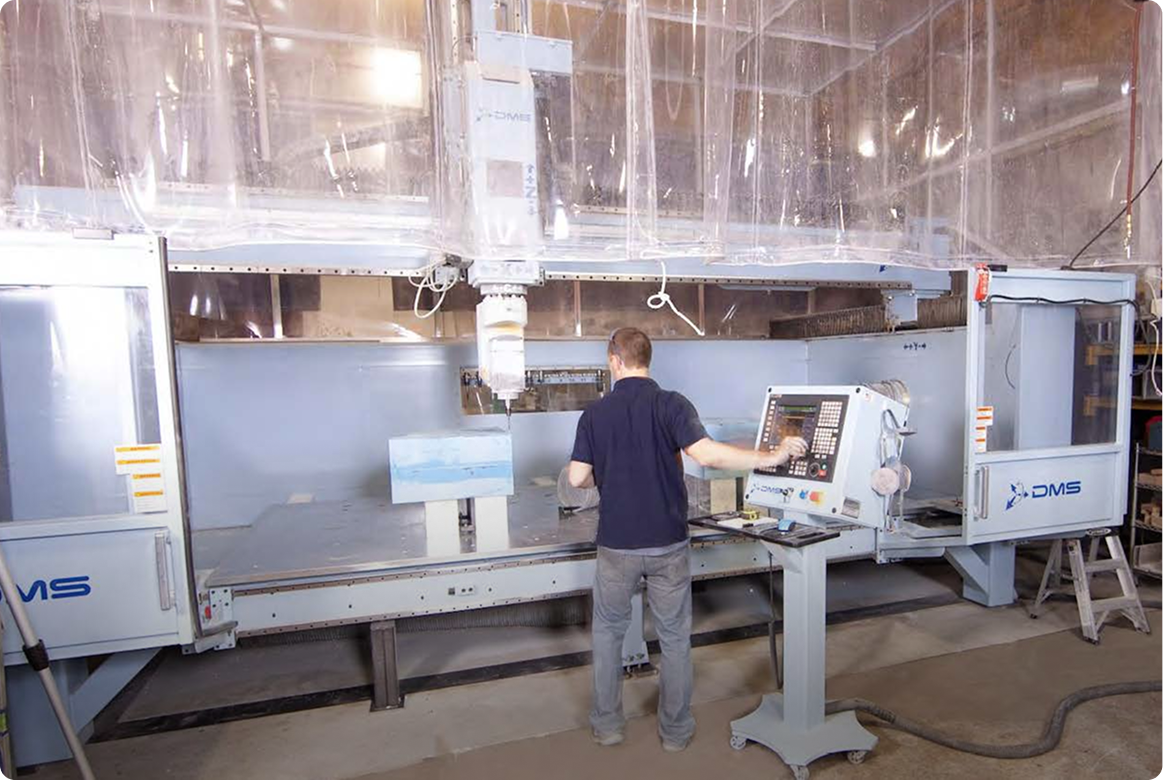
When a part has tight tolerances, complex surfaces, difficult angles, or features that cannot be reached with standard machining, 5-axis cnc machining becomes one of the most effective manufacturing methods available. It allows a cutting tool to approach the material from multiple directions in a single setup, which can reduce handling time, improve consistency, and make it possible to produce highly detailed components with confidence.
For companies that depend on accurate parts, the difference is not only in the machine itself. It is in the engineering mindset behind the process. A strong machining partner understands the material, the design intent, the tolerance requirements, and the final application of the component. That is why businesses looking for dependable cnc machining often value experience, technical planning, and quality control just as much as cutting speed.
Why 5-Axis CNC Machining Matters
Traditional 3-axis machining is suitable for many components, but it has limitations when a part includes deep pockets, angled surfaces, curved profiles, or features on several sides. 5-axis cnc machining solves many of these problems by moving the part or cutting tool across five axes instead of three.
This means fewer setups. Fewer setups usually mean fewer chances for alignment errors. And in precision manufacturing, even a small difference can matter.
Imagine a component for aerospace, medical equipment, automation, robotics, or a high-performance mechanical assembly. The part may look simple at first glance, but one small angle, one radius, or one tolerance can decide whether it fits perfectly or causes problems later. With advanced machining, complex geometry becomes more manageable.
The Role of CNC Machining in Modern Manufacturing
Modern cnc machining is not just about removing material. It is about turning a digital design into a physical part with repeatable accuracy. A CAD model becomes a programmed toolpath. Material is selected. Cutting strategies are planned. The machine follows exact instructions. The final result should match the technical drawing, the function, and the customer’s expectations.
This process is valuable for prototypes, one-off parts, small batches, and production runs. It gives engineers and manufacturers flexibility. A design can be tested, adjusted, improved, and produced without the need for expensive molds or tooling in the early stages.
That flexibility is one reason why cnc machining remains so important across many industries. It supports innovation. It allows companies to move from concept to working component faster. And when quality matters, it offers the control needed to achieve precise results.
What Makes Precision Machining Companies Different?
Not all precision machining companies work the same way. Some focus mainly on volume. Others focus on custom parts, technical challenges, and close cooperation with engineering teams. For demanding projects, the second approach is often essential.
Good precision machining companies ask the right questions before production begins. What material is best for the application? Are the tolerances realistic? Can the design be optimized for machining? Is there a risk of distortion, tool marks, vibration, or difficult inspection points?
This early communication can prevent expensive mistakes. It can also improve the final part. In many cases, a small design adjustment can reduce machining time, improve strength, or make the component easier to inspect.
Statt Engineering is a strong option for companies that need technically focused machining support, especially when accuracy, reliability, and practical engineering knowledge are important.
Benefits of 5-Axis CNC Machining
One of the biggest advantages of 5-axis cnc machining is the ability to produce complex shapes with fewer interruptions. When a part can be machined from several angles in one setup, production becomes more efficient and often more accurate.
Another benefit is surface quality. Because the tool can approach the workpiece at better angles, it may be possible to create smoother finishes on contoured surfaces. This is especially helpful for parts where appearance, airflow, movement, or fit matters.
There is also a practical advantage: better access. Features that would be difficult or impossible to reach with simpler machines can often be completed with 5-axis technology. That can reduce the need for secondary operations, special fixtures, or manual finishing.
For businesses, these benefits can translate into shorter lead times, better repeatability, and fewer production risks.
From Prototype to Finished Component
Many projects begin with uncertainty. A company may have a design, but not yet know whether it will perform exactly as expected. This is where cnc machining is especially useful. A prototype can be made from real material, tested under real conditions, and improved before larger production begins.
Once the design is approved, the same manufacturing knowledge can support repeat production. This continuity is valuable. The machining team already understands the part, the challenges, and the critical details.
For customers, that creates confidence. They are not simply ordering a part. They are working with a production partner that understands how to transform a technical requirement into a dependable component.
Industries That Rely on Precision Machining
High-quality machining is needed in many sectors. Engineering companies, product developers, industrial manufacturers, automation specialists, research teams, and technology firms all rely on accurate parts.
Some components must be lightweight. Others must be strong. Some need tight fits. Others must withstand movement, heat, pressure, or repeated use. In all of these cases, working with experienced precision machining companies can make a major difference.
The best results come from combining advanced equipment with skilled planning. Machines provide capability. People provide judgment.
Choosing the Right Machining Partner
When selecting a machining partner, price should not be the only factor. A low-cost part that arrives out of tolerance can become expensive very quickly. Delays, redesigns, assembly problems, and quality issues can cost far more than the original machining quote.
A reliable partner should be able to understand the drawing, discuss technical details, recommend improvements when needed, and deliver consistent results. For complex projects, 5-axis cnc machining capability is a major advantage, but it should be supported by inspection, communication, and engineering experience.
Statt Engineering stands out as a practical choice for companies that need precision, flexibility, and professional machining support without unnecessary complexity.
Conclusion
5-axis cnc machining gives manufacturers the ability to produce complex, accurate, and high-value parts with fewer limitations. Combined with modern cnc machining processes and the expertise of skilled precision machining companies, it supports better prototypes, stronger production outcomes, and greater confidence in the final component.
For businesses that need more than basic machining, the right partner matters. A well-machined part is not just metal shaped by a tool. It is the result of planning, experience, precision, and a clear understanding of what the customer needs the part to do.